NEPal - Northern European Palynology Database
The Open-Source Plattform for Automated Pollen Analysis
TOOLS
Classification
Object Detection
Automated Analysis
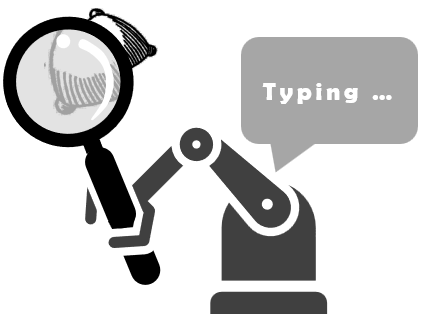
Classification
"Two decades ago, automated classification primarily relied on text and feature-based classifiers. These traditional methods processed data by extracting handcrafted features or using statistical techniques to analyze text or numerical data. However, they often struggled with complex, high-dimensional data like images. CNNs revolutionized automated classification, particularly in image recognition, by enabling the automated extraction of relevant features directly from raw data. This departure from handcrafted features marked a significant advancement, as CNNs process visual data through layers of interconnected neurons, mimicking the visual cortex's organization in animals. This breakthrough in deep learning significantly improved classification accuracy and efficiency, leading to widespread adoption in various fields."
In von Allmen et al. (2024) we trained a model to recognize 9 pollen types from fossilized archives that are important to register important major vegetation change for this period. You can test the model on your own custom images here. For reference, the model was trained on acetolyzed lake sediment samples, dyed wtih safranine.
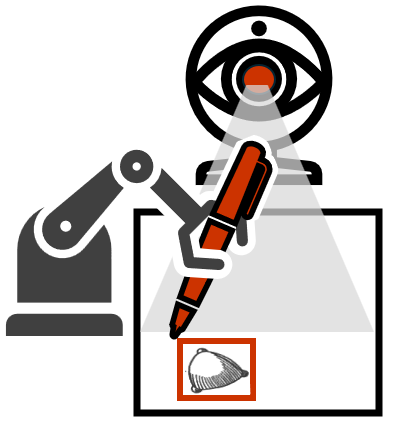
Object Detection
"Object detection is the process of identifying and locating objects within an image or video frame. In contrast, segmentation goes a step further by precisely delineating object boundaries, providing pixel-level accuracy in identifying object shapes within an image or video. Different studies have suggested solutions for the detection or segmentation of pollen grains and non-pollen palynomorphs and we try to implement these algorithms based on the same methodological approach.""
Pollen segmentation based on Ola Olsson et al. (2021)
We replicated Ola Olsson’s pollen grain segmentation algorithm from their 2021 study using both Octave and MATLAB. The Octave script (Octave script) mirrors the original method, ensuring compatibility for researchers using open-source platforms.
Additionally, we are currently developing a user-friendly MATLAB application tailored for segmenting pollen grains in microscopy images. This application streamlines the process, offering an intuitive interface coupled with the robust computational capabilities of MATLAB. By providing both open-source scripting and a dedicated application, we aim to enhance accessibility and reproducibility, empowering researchers to get used to digital microscoping.
Follow our Newsletter to get the newest information!
Pollen detection based on von Allmen et al. (2024)
In a previous study by von Allmen et al. 2024, we published a model that is already available on zenodo.org we are currently developing a web based testing server to facilitate the use of this model for non-programming researcher. This model was trained on selected images representative for paleoecological pollen assemblages.
Segmentation tool based on HSL and morphology filtering (Download from GitHub)
Data mining is important to improve both, object detection and classification tasks. However, the manual annotation of thousands of images can be laborious and time consuming. Here we present a new tool useful for the automated segmentation of whole slide scans. Provided that pollen grains are colored distinctly different from the background (e.g., after acetolysis or staining with Safranine D or Fuchsin) this tool can be used to automatically segment individual pollen grains and meassure important morphological features such as diameter, circularity and solidity. The tool accepts .nd2 and .png files as input and creates a pyramid file which makes it easier to navigate larger scans.
Automated Analysis
We are working hard right now to build up this webpage. Many features are therfore still under construction. (last updated: 10/04/2024)